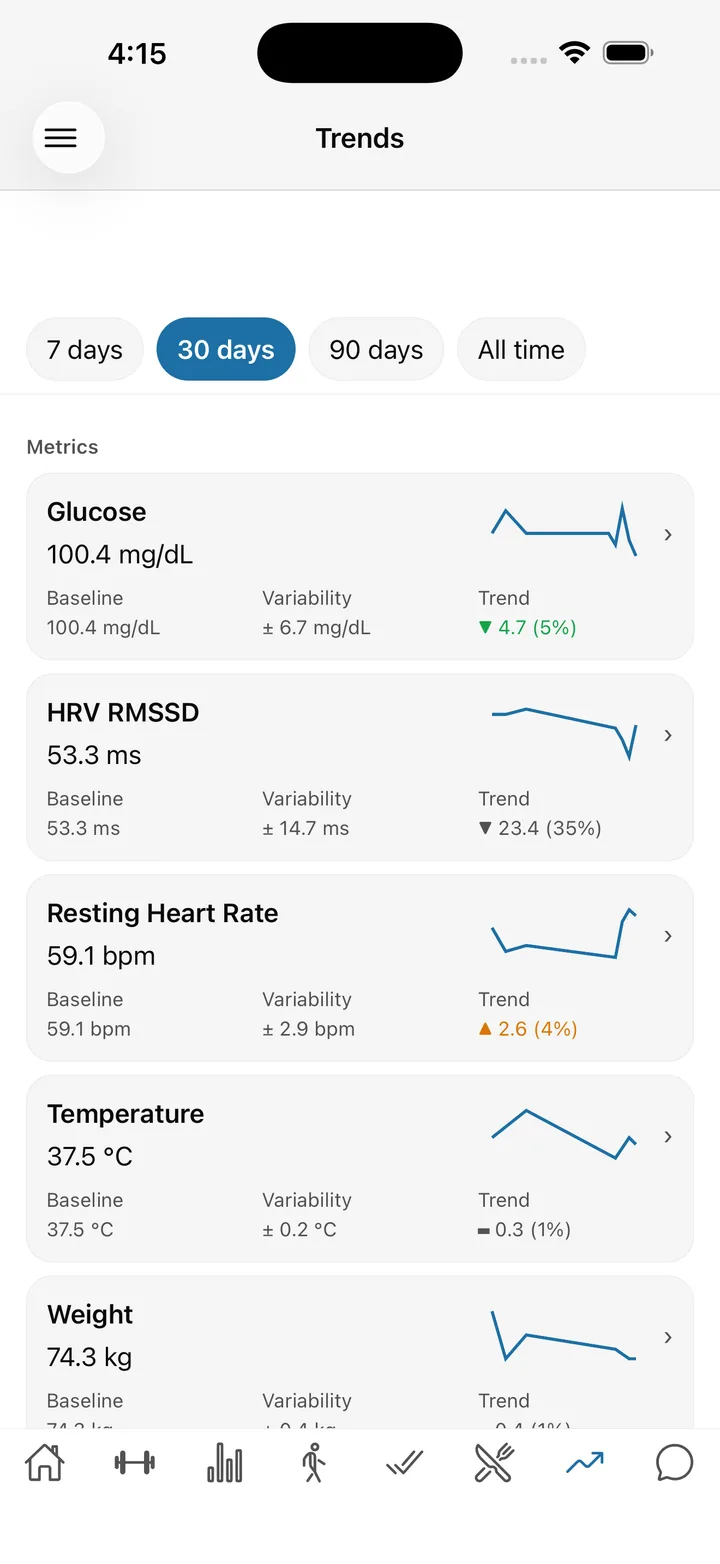
You've been training for a few weeks. The mirror looks the same, and you want to know if any of it is working. Here's how to track your workout progress so you can see it for yourself, with numbers you trust.
Track your workout progress in the log
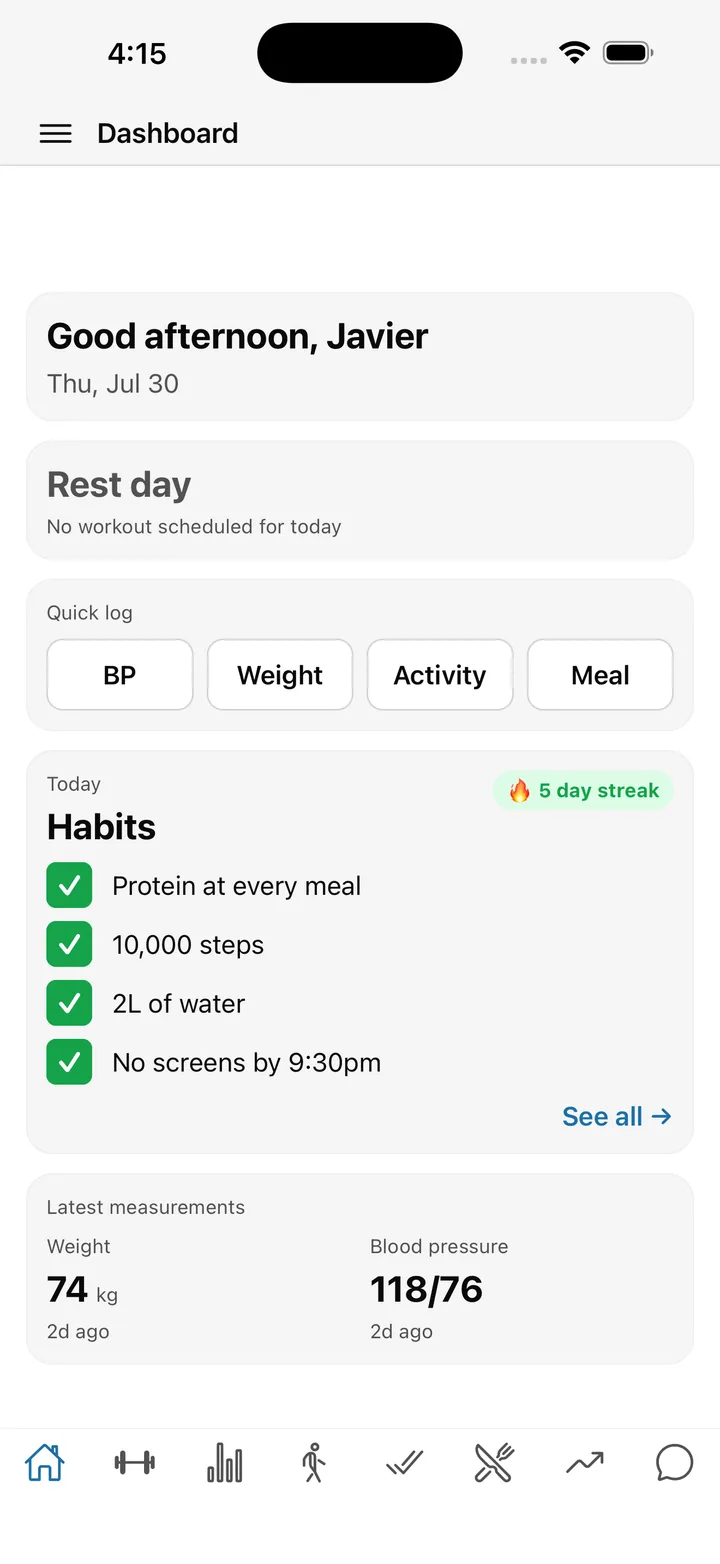
Every session you log records the exercise, the sets, the reps and the load. That record is your progress, written down. Say four weeks ago you did eight push-ups against a table, and today you did twelve. That change is real, and it's on the page.
I read the same log. When I reply on a workout, I'm looking for what moved: a rep added, a dumbbell that went up a size, a set that felt hard last month and felt fine today. I keep the numbers to a few. Here's why a couple of numbers are enough.
Weigh in the same way each time
Your weight moves from day to day: water, salt, a late dinner, a long day on your feet. One morning's number tells you little. Weigh yourself at the same time, after the bathroom and before breakfast, a few mornings a week. Then look at where the numbers sit across the month.
A tape measure helps too. Once a month, measure your waist at the belly button, breathing out, same time of day. Write it down. Your clothes keep score as well: the belt notch, the pants that fit again.
Notice what your days feel like
Some progress shows up in your week, in the things you do every day:
- You take the stairs to the office and arrive with breath to spare.
- You carry the groceries, or your kid, without setting them down.
- You sleep through the night after a training day.
- You still have energy at three in the afternoon.
Write these down or tell me in a message. "Took the stairs to the fourth floor" is a result, and I want to hear it.
Progress photos, for you
Photos can help if you want them. Take them once a month, in the same spot, the same light, the same time of day, the same clothes. Keep them on your phone and look at them side by side every few months. They're a record for you, and they stay yours.
Look back every four weeks
Checking every morning turns one bad night of sleep into a bad week of mood. Four weeks gives the numbers time to say something. When the day comes, put this month next to last month and ask three questions:
- Which numbers moved, and in which direction?
- Which sessions did I keep, and which did I miss?
- What felt hard a month ago that feels fine now?
If things moved, keep going and add a little: a rep, a set, a day. If nothing moved, that tells us something too. Maybe the plan asks for days your week can't give, or the meals need a look. We change one thing and check again in four weeks. That's how a plan gets built around you: by reading what happened and adjusting to it.
Common questions
- How often should I weigh myself?
- A few mornings a week, under the same conditions, is plenty. Read the month as a whole and let single mornings go.
- My weight hasn't moved. Am I making progress?
- Check the other numbers: your waist, your workout log, how your clothes fit, how you sleep. If all of them sit flat for a month or two, that's the moment to change the plan, and that's my job.
- Do I need a fitness tracker or a smart scale?
- A bathroom scale, a tape measure and your workout log are enough to start. Use the gear you already own.
- Do I have to send you photos?
- No. Photos are for you. Tell me what you notice in them if you want to, and keep the pictures on your phone.
What to do this week
- Pick your numbers: your weight, your waist, and one exercise you'll repeat.
- Write down today's figures. That's your starting point.
- Set a reminder four weeks from today, and look back then.
Between now and then, train and log it. When the four weeks are up, you'll have your own proof, in your own numbers.
Want someone reading your numbers with you?
That's what I do. I build your program, you log your workouts and meals in the app, and I reply on what you log and adjust the plan as you go. Coaching from Javier, ₱1,200 a month.