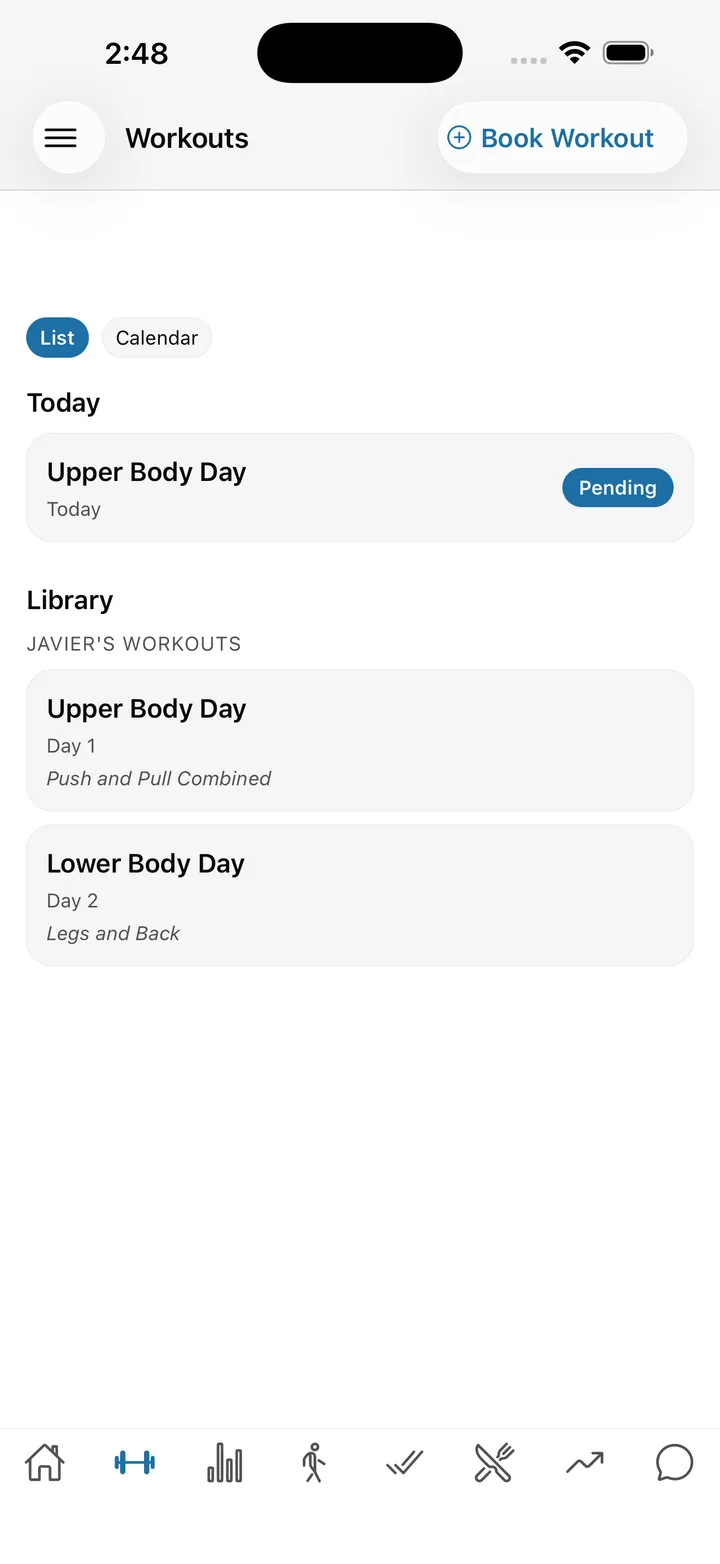
People search for how to get motivation to start working out. Here's what I tell my clients: decide in advance. Pick the days, the time and the session before the week starts, and you can train on the days the motivation never shows up.
Decide before the day comes
Motivation comes and goes like the weather. A bad night's sleep, a long day at work, a cancelled plan, and it's gone. So I build training on something that stays put: a time in your calendar.
If you settled on Sunday that you train Tuesday at 6pm, there's nothing to argue about on Tuesday at 6pm. It's Tuesday, so you train. Nobody needs a reason to brush their teeth. That's the level we're aiming for.
Pick times you can keep: before work, at lunch, after the kids are in bed. A time that fits your week is a time you'll show up for.
Make the first step tiny
The hard part of a low day is the first minute. Make it small and specific: shoes on, mat out, first exercise. Once you're moving, the rest of the session follows.
Lay out what you need the night before. Your clothes, your water bottle, the plan open in the app. Every decision you make ahead of time is one you don't face when you're tired.
Have a bad-day version of every session
Some days you'll be tired, stressed or short on time. Plan for them. Every session in your program gets a short version:
- The first two exercises of the session.
- Two sets each.
- Fifteen minutes, start to finish.
On a bad day, that's the session. Do it, log it, and call it done. If you feel good once you're going, finish the full session. Either way, the habit keeps going. If you miss the day anyway, read what to do after a missed workout.
Track one thing you can keep honest
Pick one number you won't fudge, like sessions done this week. Log it after each session. When you check in with me, we look at what happened and change what isn't working.
If one session keeps getting skipped, that's a signal. Maybe it's the wrong day, the wrong time, or the wrong exercise. We change the plan, and you keep training.
Common questions
- What if I never feel like exercising?
- Then build the plan for that. Fixed days, short sessions, and a first exercise you can start without thinking. A lot of good sessions start with no enthusiasm at all.
- Is it okay to skip when I don't feel like it?
- Do the bad-day version first. If you skip, do the next session on the plan, and tell me.
- Should I wait until I feel ready?
- Start this week. Pick a day, a time and the bad-day version, and do that. Feeling ready comes from training, and you get it by starting.
- What if I feel tired all the time?
- Tell me, and see a doctor if it goes on for weeks. Tiredness that won't lift is worth a checkup before we build up the training.
What to do this week
- Choose two or three training days and a time for each. Put them in your calendar.
- Write the bad-day version of each session.
- After each session, log it. Full or short, it counts.
That's the system. Run it for a month and it starts to feel normal, which is the point. For keeping it going month after month, read consistency is coming back.
Want a system that runs on bad days too?
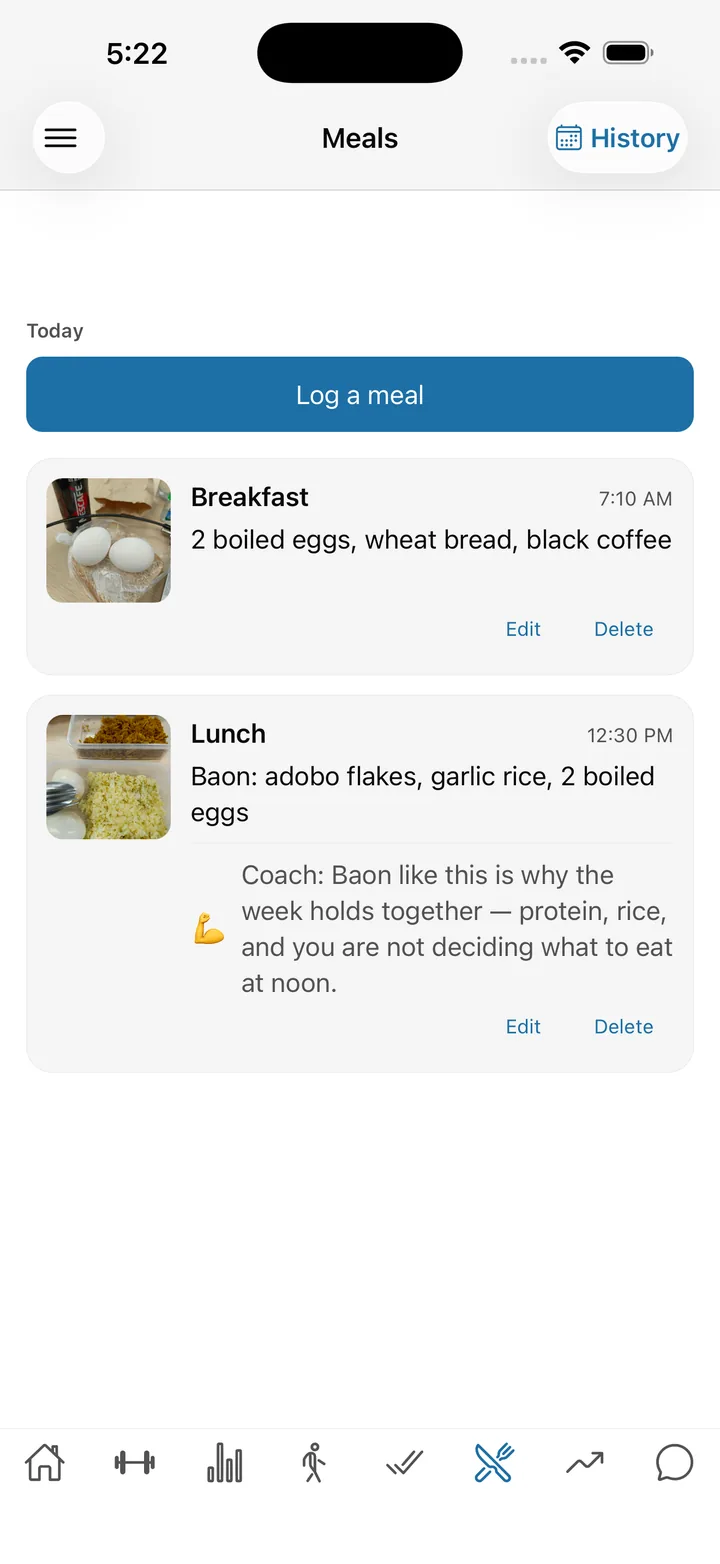
That's what I build. I set up your program around your week, you message me in the app, and I reply on the workouts and meals you log. Coaching from Javier, ₱1,200 a month.